
Blog
Metal Face Doom: The Mask, The Myth, The Legend
Sep
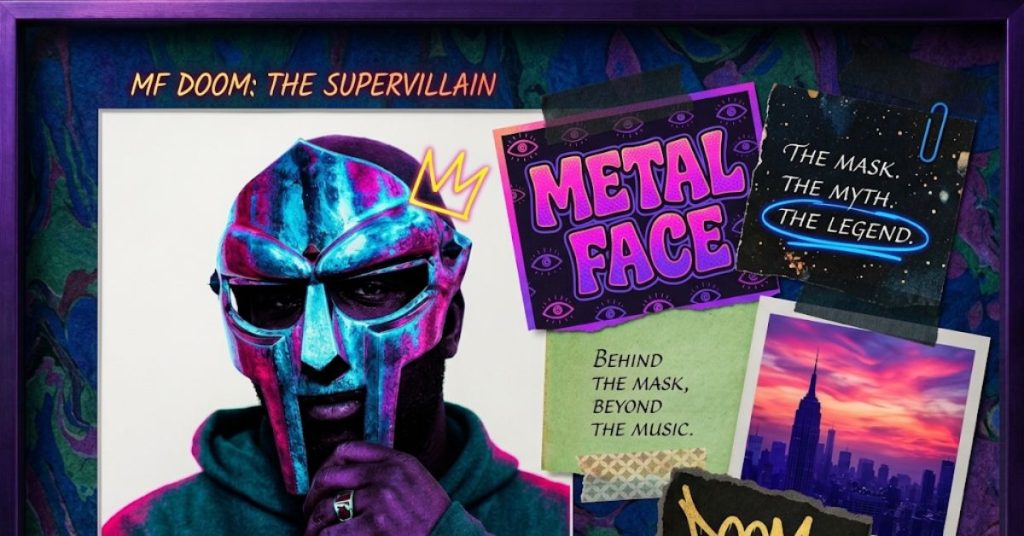
For many fans, the mask lands before a single bar does. A battered metal faceplate, worn low over the eyes, belonging to no human being in particular but to a character. That image is one of the most iconic in underground hip-hop history, and it belongs to Metal Face Doom: a persona built from grief, borrowed mythology, and total artistic control.
“MF” does not stand for something vague. It expands to Metal Face, and that distinction shapes every part of how you understand what DOOM built across two decades. This is not a rapper who put on a costume for aesthetic effect. This is a man who constructed a fictional identity so complete that the work, the label, and the legacy all operate under the same name. At MF DOOM Merch Official, the mask-graphic aesthetic lives on in wearable form, but the story behind it runs much deeper. Here is where it starts.
MF DOOM COLLECTION
From Zev Love X to the masked villain: how Metal Face Doom was born
Before the mask, there was Daniel Dumile performing as Zev Love X alongside his brother DJ Subroc in the group KMD. They were signed to Elektra Records, building a catalog and a reputation, until 1993 shattered both. Subroc was killed by a car while crossing the Long Island Expressway, and Elektra dropped the group shortly after, reportedly over concerns about their second album’s artwork. The label and the brother were gone within months of each other.
DOOM disappeared from rap for several years. That absence was not failure; it was the crucible. When your real name carries that much grief, a new identity is not a vanity project. It is a way back to the work. The persona that emerged was designed to hold everything the music needed to say without the biography getting in the way.
By 1997, he was performing again at open mics on the New York underground circuit, covering his face with a stocking. Reports from that period suggest the choice signaled that the face was simply not the point, the work was. By the time Operation: Doomsday dropped in October 1999, the stocking had been replaced by steel. The metal mask era had officially begun, and the character had a name to match.
The mask’s true origin: Doctor Doom, a Gladiator replica, and Metal Face Doom’s modified identity
The name and the original visual concept came directly from Marvel Comics’ Doctor Doom, the Latverian supervillain who operates behind a metal faceplate and treats human judgment as irrelevant. DOOM borrowed the name, the villain posture, and the mythology of a character who is always masked, always in control, always operating on a plane above ordinary accountability. Early references in his persona leaned into those Marvel connections deliberately.
The specific mask that became most associated with Metal Face Doom is not a Marvel prop. It is reportedly a Gladiator replica, the kind sold following Ridley Scott’s 2000 film, that was modified to be worn rather than displayed, with an internal strap rigged for actual use. According to accounts of the process, DOOM later added chrome and a ruby himself. That modification marks the line between a reference and a creation. He took borrowed mythology, made it structurally his own, and wore it as something irreducibly personal.
It is worth noting the timeline: the Doctor Doom, inspired metal mask imagery was already part of the persona by the 1999 Operation: Doomsday release. The Gladiator-replica, based wearable that became his widely recognized physical prop developed in the early 2000s, after the film’s release. These were two distinct phases of the same evolving iconography.
What “Metal Face” actually decodes to in DOOM’s universe
When Esoteric of Czarface explained the title of their 2018 collaboration, he was direct: “MF stands for Metal Face.” That is not a retroactive explanation. It is the stated logic of the persona. The face behind the music is armored, unreachable, performing through steel rather than skin. The mask was never about disguise in the conventional sense. It was about insisting that the character, not the biography, was the relevant thing.
This architecture runs through every alias DOOM operated under. Viktor Vaughn, King Geedorah, and the core MF DOOM character are all fictional entities with their own internal logic. Metal Face is the master persona that contains all of them, a supervillain framework that gave every lyric a theatrical home outside the normal rules of the genre. The villain framing was not a gimmick. It was a container for complexity. Instead of a rapper speaking as himself, every bar arrived from a character who existed above ordinary human accountability, which made the work feel both personal and mythological at once.
The mask also became shorthand for an entire philosophy: let the work speak, never the face. That philosophy made Metal Face Doom influential far beyond his sales numbers, and artists across scenes absorbed that lesson even when they could not name where it came from.
Metalface Records: the label behind the Metal Face Doom mythology
DOOM founded Metalface Records in 2000, and the logic was the same instinct that produced the mask: total control over how the art is presented. Independent infrastructure meant no label executive deciding what the catalog looked like, who heard it, or when it was available. The label became the institutional expression of the same philosophy the mask embodied.
After DOOM’s death in December 2020, Metalface Records came under the management of the estate through Gas Drawls LLC, co-founded by his wife and business partner Jasmine Dumile Thompson. Licensing is currently routed through Rhymesayers.
The label’s most significant releases include the reissue of Operation: Doomsday starting in 2011, the deluxe vinyl reissue of The Mouse and the Mask: Metalface Edition in May 2017, Special Herbs reissues, and KMD’s Ruffs + Rares deluxe edition in 2015. Metalface Records functions as the institutional guardian of the myth, keeping the catalog in the hands of people who understand what it means.
DOOMSDAY COLLECTION
Products by Category
-
MF Doom Knicks Hoodie Black – Limited Doomsday 2025 | New Era Premium Streetwear
Original price was: $ 120.00.$ 99.99Current price is: $ 99.99. -
MF DOOM Knicks Hoodie Heather Gray – Limited Doomsday 2025 New Era Streetwear
Original price was: $ 125.00.$ 99.99Current price is: $ 99.99. -
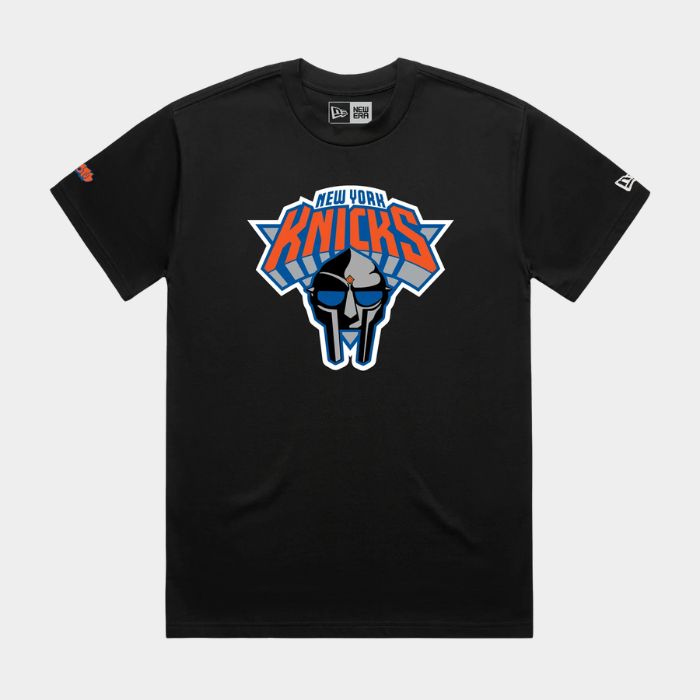
MF DOOM New Era Knicks Shirt Black – New Era Doomsday 2025 Limited Tee
Original price was: $ 110.00.$ 74.99Current price is: $ 74.99. -
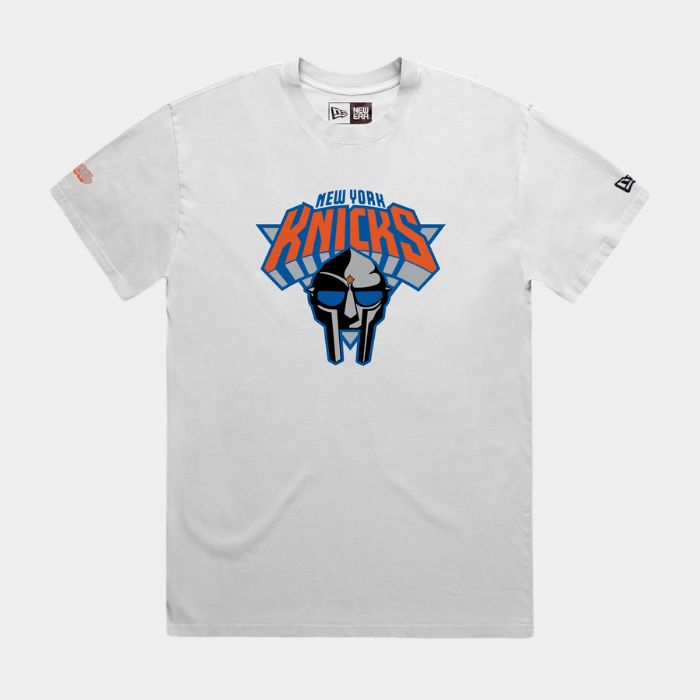
Official MF DOOM New Era Knicks Shirt White – Doomsday 2025 Tee | MF Doom Merch
Original price was: $ 110.00.$ 74.99Current price is: $ 74.99.


The Metal Face Doom discography that built the legend
Why Operation: Doomsday defined the persona
Operation: Doomsday (October 1999) is the founding document: raw, labyrinthine, and built on a catalog of samples that DOOM wove together like a villain’s origin montage. Mm..Food (November 2004) is the playful masterwork, the record where the character feels most comfortable and most in control. Born Like This (March 2009) strips everything back to its most minimal statement, as if the character had nothing left to prove and knew it. Each album deepens the Metal Face mythology without ever explaining it.
Madvillainy (March 2004, with Madlib as Madvillain) sits in a category of its own. That record took the DOOM persona beyond the underground and into the permanent conversation about the greatest hip-hop albums ever made. It did this not through ambition but through restraint: short tracks, no hooks, no concessions to accessibility, and some of the densest lyrical writing in the genre.
The collaborations extended the universe outward. The Mouse and the Mask (2005, with Danger Mouse as DANGERDOOM), Key to the Kuffs (2012, with Jneiro Jarel as JJ DOOM), and NehruvianDOOM (2014, with Bishop Nehru) each added a new register to the mythology. Czarface Meets Metal Face (March 2018) announced its premise in the title itself, casting DOOM as the villain counterpart to Czarface’s hero collective in a full comic-book team-up framework. The posthumous Super What? (May 2021) extended the mythology past DOOM’s death in a way that felt intentional, as if the character had always been designed to outlast the man.
Wearing the mask yourself: how fans carry the Metal Face legacy today
The mask was always meant to be transmitted. Part of its power as a cultural object is that it was designed to sit on any face, to belong to anyone who understood what it represented. The mythology was never locked inside one man’s biography. It was portable and available to anyone willing to carry it seriously.
At MF DOOM Merch Official, that transmission happens in wearable form. The mask-graphic tees, graffiti-style DOOM prints, Madvillainy-specific designs, and accessories like rings and chains are not generic fan merch. They are iterations of the Metal Face aesthetic built for people who want to carry the character into their daily lives with the same intentionality DOOM brought to every bar he recorded. The range of the catalog, from oversized hoodies to wearable jewelry, reflects how fully the Metal Face persona extends across visual and physical culture. MF DOOM Merch Official is the licensed destination for that aesthetic.
For the music itself, Bandcamp offers direct downloads in multiple formats for the closest thing to a direct transaction with the catalog. Qobuz carries lossless options for audiophiles. Apple Music and Amazon Music cover mainstream access. Engaging with the music and wearing the aesthetic are two sides of the same act of participation in the Metal Face Doom mythology. One without the other is incomplete.
The mask doesn’t come off
Metal Face Doom started as a grief response, became a supervillain performance, evolved into a label structure, and eventually became a permanent cultural fixture that outlived the man behind the mask. Understanding what the name means requires holding all of it at once: the Marvel reference, the personal trauma, the modified Gladiator replica, the lyrical density, and the 20-plus-year catalog that never softened to meet commercial expectation.
The mask doesn’t come off. It gets passed to the next generation of fans who find it, put it on, and feel what it means to operate above the ordinary. Every hoodie worn, every record played, every ring on a fan’s hand is another iteration of the same character DOOM built out of necessity and turned into legend. Metal Face Doom was never just a name. It was always an instruction.
